Keep Your Outdoor Cat Safe
Cats are curious by nature and love to explore the great outdoors. Read our top tips for keeping your kitty safe outside.
Added on: 11 Nov, 2020
Posted by: Sandra James
5 min read (849 words)

Introduction
While there are many benefits to letting your cat outside, including increased physical activity, natural stimulation and an outlet for instinctive cat behaviour such as exploring, there are also definite risks, but there are some practical steps you can take to keep your outdoor cat safe.
Identification
Microchip
Firstly, one of the most important things that you can do is microchip your cat. A microchip is a permanent form of identification that will help identify and reunite you with your cat, should it go missing. Your local vet will be able to microchip your furry friend - it's a safe and painless procedure. The microchip will store your cat's details as well as its unique digital code. If your cat is found, a vet or animal shelter can scan your cat's embedded microchip to find your details and that of your cat from the microchip database.
Collar
Another way to identify your cat is with a bright collar and an ID tag with your contact details. However, it is vital to make sure that the collar has a quick release. Collars can sometimes get caught on objects whilst your cat is exploring. Quick-release or safety collars are specifically designed to open when your cat pulls at it with force. This ensures that your cat will be able to get out of any space, even if its collar is stuck. You can even get safety collars that have GPS, so you can check where your cat is at any time!
Neuter and Spay
Neutering your male cat will go a long way to keeping him safe from other cats and minimise the risk of him getting lost. This is because neutering will reduce your cat's desire to wander too far in search of a mate and go missing and potentially fight with other cats. This, in turn, will reduce the risk of wounds, punctures or abscesses and other feline diseases.
Spaying your female cat will also, naturally, stop them from becoming pregnant and adding to the unwanted kitten population as well as avoiding the risks associated with pregnancy and birth, especially in very young cats.
Vaccinations and Tick and Flea Control
Whether your cat will be having access to the outdoors or not, your cat must be kept up-to-date with its vaccinations. A yearly vaccination helps minimise the symptoms of feline diseases. Outdoor cats are much more likely to be exposed to contracting infectious diseases such as Feline Infectious Enteritis (FIE), Feline Herpes Virus (FHV), Feline Calicivirus (FCV), Feline Leukaemia Virus (FLV).
You should also regularly treat your cat with flea, tick and worming medication to keep parasites at bay.
Chemical Products and Toxic Plants
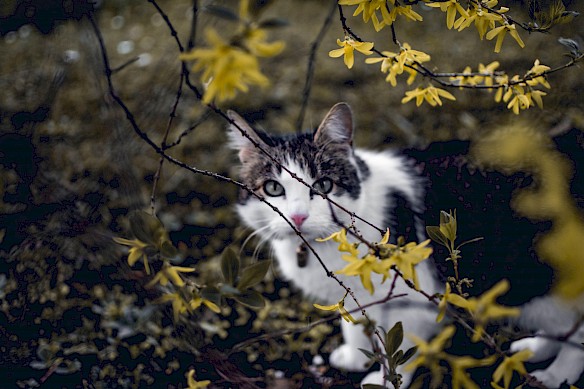
Outdoor cats are more likely to be exposed to dangerous chemicals like antifreeze, rat poison, slug repellent and many others. Ensure that your garden does not have any poisonous plants your cat is likely to eat. Plant a cat-friendly garden and remove any harmful chemical products and plants from the garden. Speak to your neighbours and ask them if they can do the same.
Inclement Weather
Both extreme heat and cold can be dangerous for cats. If you are not home much during the day to let your cat in or out, think about installing a cat flap. Microchip flaps are designed to prevent other cats (and animals) from entering your home and will also allow your cat to escape danger.
If you can't install a cat flap, then it is a good idea to set up a warm little space for your cat where they can shelter from the cold. Keeping a dish topped up with water outside is also a good idea, so your cat can stay hydrated in hot weather.
Road and Night Safety
Although you can't control where they roam, you can encourage your cat to be inside during high traffic and rush hour times, especially if you live near a busy road.
Try to ensure that your cat is inside by nightfall. Cats are more at risk at night when car headlights can blind them. Encourage your cat to come in around dusk by feeding at a set time and closing the cat flap and any open windows at that time.
Consider creating a "cat-proof garden" that would allow your cat outdoor time without allowing him to roam further.
As you can see, there are many things that you can do to ensure that your feline friend is kept as safe as possible when enjoying all the sights and smells of the great outdoors.

Sandra James
Owner & Founder
The Cat Butler was set up by Sandra James in recognition of the fact that a stay in a cattery can be unsettling for many cats and also their owners.
 Cat Butler Cat Sitting Our professional cat sitting services are delivered by trained and vetted cat experts in the comfort of your cat’s own home, helping us to make sure that they are happy and safe while you are away.Home Care & Security We are more than just cat sitters. While you’re away, The Cat Butler team is here to make sure that your home is also safe and looked after.The Cat Butler Process We offer a free meeting to get to know your cat and to discuss their routine and care requirements.


 Cats are happier at home